Learning That Builds Understanding, Confidence, and a Strong Foundation.
Our academic approach combines clear teaching, active learning, and personal attention — designed to help each child understand, participate, and grow.
Strong teaching begins with understanding the child and the purpose of learning.
Concepts introduced with clarity, examples, and understanding.
Children participate, ask, and practise — not just listen.
Each stage builds cleanly onto the next, with consistent support.
A clear path from early discovery to senior secondary certification.
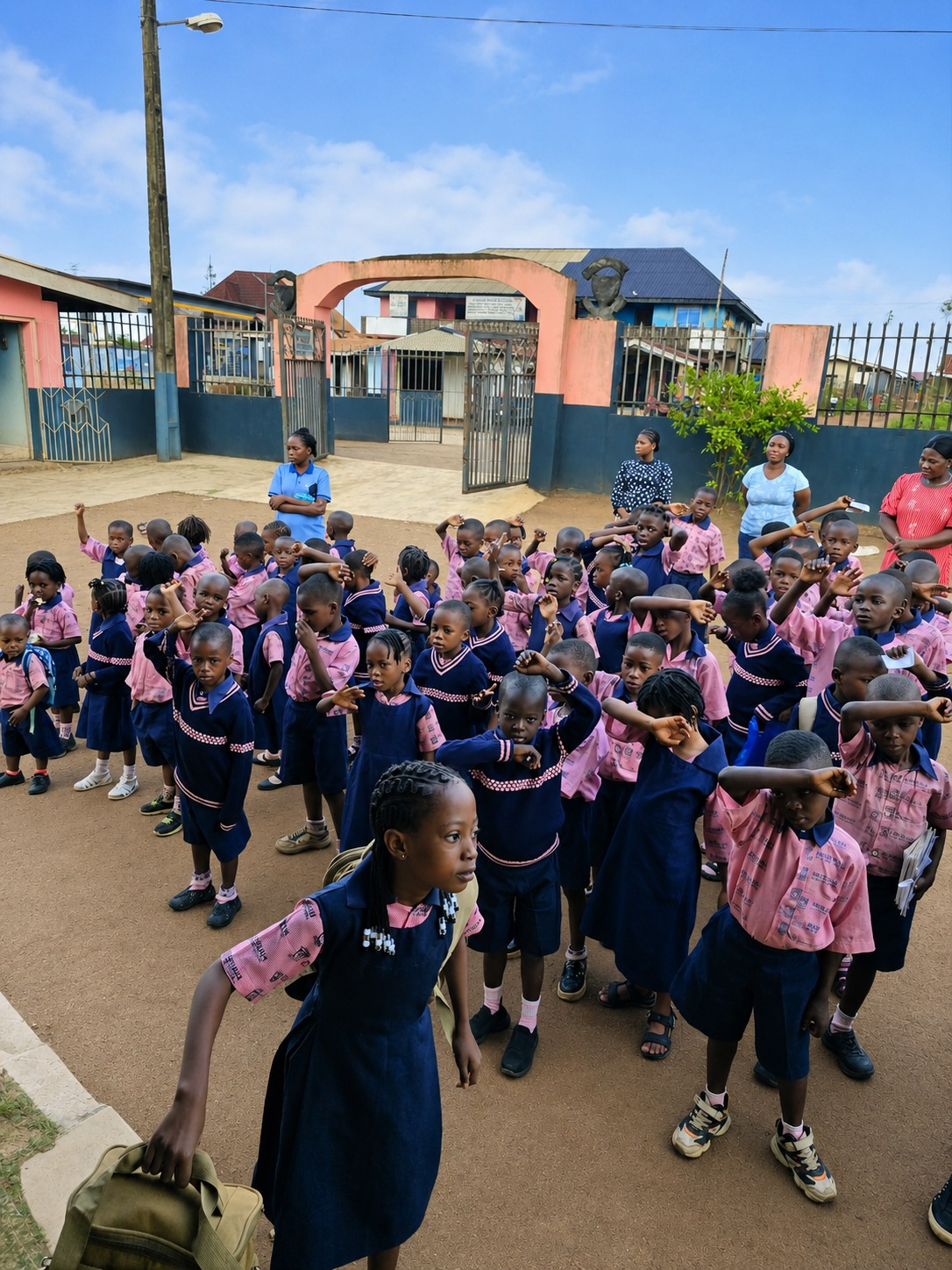
The first years of learning should feel safe, curious, and full of discovery.
- · Communication and Language
- · Early Literacy
- · Early Numeracy
- · Creative Activities
- · Physical Development
- · Personal and Social Development
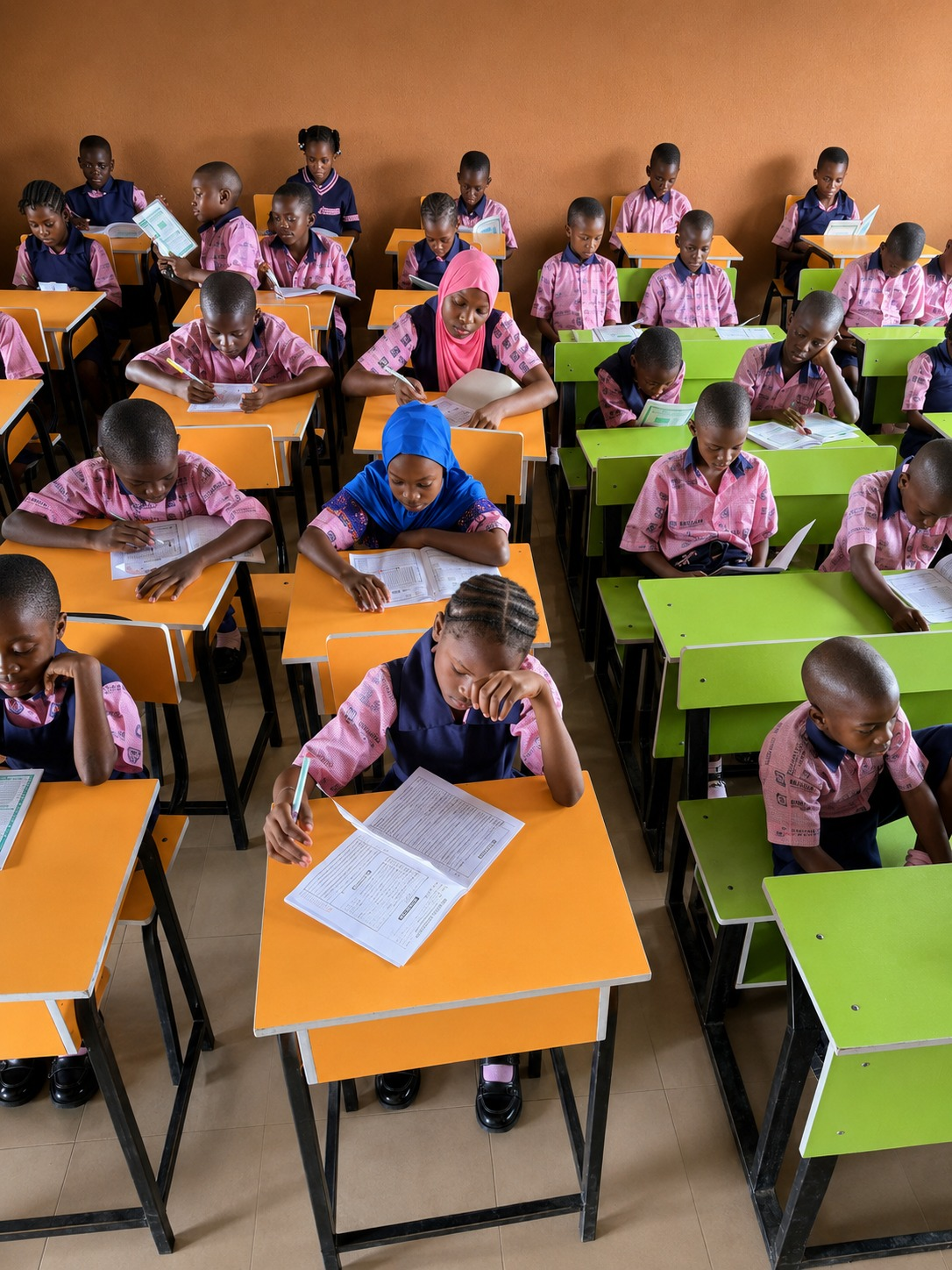
Building knowledge, discipline, and confidence year after year.
- 01Primary 1
- 02Primary 2
- 03Primary 3
- 04Primary 4
- 05Primary 5
- 06Primary 6
The national junior curriculum, taught with depth and discipline.
Junior secondary broadens learning across the sciences, technology, business studies, languages and civic formation. Progress is measured with two continuous assessments and a terminal examination each term, on the WAEC A1–F9 scale, culminating in the Basic Education Certificate Examination (BECE) at the end of JSS 3.
- · English Studies
- · Mathematics
- · Basic Science
- · Basic Technology
- · Social Studies
- · Civic Education
- · Business Studies
- · Agricultural Science
- · Home Economics
- · Computer Studies / ICT
- · Christian Religious Studies
- · Cultural & Creative Arts
- · Physical & Health Education
- · French
- · Yoruba
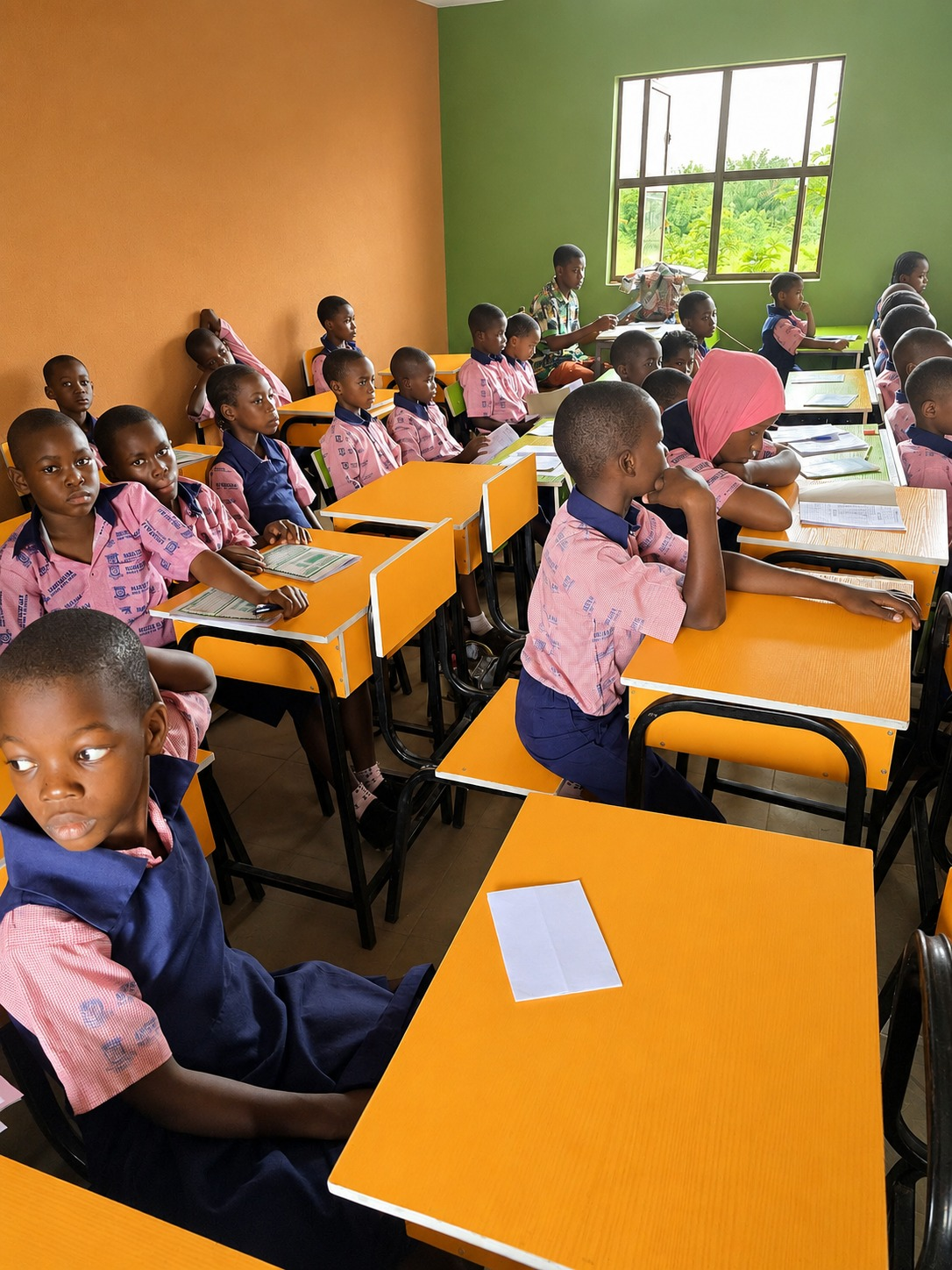
Streamed study, external examinations, and readiness for university.
At senior level, students specialise in Science, Arts/Humanities or Commercial while retaining the compulsory core. Candidates are registered and prepared for WASSCE (WAEC), the NECO SSCE and the JAMB UTME, supported by house and prefect leadership, boarding provision, and structured prep.
- · English Language
- · Mathematics
- · Civic Education
- · Computer Studies / ICT
- · Physics
- · Chemistry
- · Biology
- · Further Mathematics
- · Agricultural Science
- · Technical Drawing
- · Literature-in-English
- · Government
- · Christian Religious Studies
- · History
- · Geography
- · Visual Arts
- · Financial Accounting
- · Commerce
- · Economics
- · Marketing
- · Office Practice
WAEC-standard grading from JSS 1 through SS 3.
Each subject score combines two continuous assessments and a terminal examination.
- BECE — Basic Education Certificate Examination, written at the end of JSS 3.
- WASSCE (WAEC) — West African Senior School Certificate Examination for SS 3 candidates.
- NECO SSCE — National Examinations Council senior certificate examination.
- JAMB UTME — Unified Tertiary Matriculation Examination for university admission.
Houses & Prefects
Secondary students belong to a house and compete in inter-house sports, debates and cultural events. Senior students serve as prefects, learning responsibility through real duty.
Boarding Life
Hostel accommodation with house masters, supervised evening prep, structured routines and pastoral care for students who board.
Guidance & Careers
Stream selection at the end of JSS 3, subject counselling, and UTME/university guidance through senior school.
Children learn better when teaching is clear, purposeful, and engaging.
Teachers introduce concepts clearly and check for understanding before moving on.
Children practise what they learn — through exercises, examples, and everyday application.
Every child is encouraged to speak, ask, and take part in classroom learning.
Feedback focuses on progress, correction, and growing confidence over time.
Progress should be observed, understood, and supported.
Pupil progress is understood through everyday class activities, assignments, tests, and teacher observation. Each of these gives us a different view of how a child is learning — and helps teachers guide and support each pupil individually.
Every child deserves the opportunity to understand and improve.
Teachers work closely with pupils, encourage questions, and give extra attention where needed. When a child is finding something difficult, the classroom is a place where they can ask and be helped.
The habits children develop also shape how they learn.
Discipline, respect, curiosity, and responsibility make a real difference to academic progress. That is why character and academics are taught together.